
Auburn, CA
Garage Door Roller Replacement Across the Auburn Area
Rollers wear fastest on Auburn's 1960s-90s garage doors from years of heat-cycling. See what fails, why it happens here, and when a swap beats a new door.
The Complications
A roller job sounds simple until you're under a door built in 1975 with steel rollers riding in a track that's never been lubed. The roller itself is cheap.
Rusted brackets, off-center cables
What makes the job complicated is everything attached to it: a bent track from a roller that jumped the rail, a bracket that's rusted to the track, or a cable that's been riding slightly off-center for years because of the worn roller underneath it.
Original or cheap steel rollers
On a lot of the housing stock across this service area, built mostly between 1963 and 1995 with a median year around 1981, the rollers still on the door are often the originals or a cheap steel replacement from a prior repair.
Shock through the track
Steel rollers don't flex, so every open and close transfers shock straight into the track and the hinges. By the time an owner calls about a noisy door, it's rarely just the rollers - it's the rollers plus the track wear and hinge wear they caused.
Replace only failed parts
We replace what's actually failed, not just the part that's making noise, because swapping rollers into a bent track buys you a month, not a fix. One limitation worth saying plainly: if the track is bent badly enough, straightening it is often a worse use of money than a new track section. We'll tell you which one you're looking at before we start.
Why It Happens Here
This area sits in a moderate heat climate band, which doesn't sound dramatic, but it means steady daily heat-cycling on the door and track rather than one or two extreme swings a year. Steel and nylon expand and contract a little every day, and over enough years that constant small movement is what wears out a roller stem and bearing, not a single hot week. Combine that with a housing stock where most garages across the 17 named areas we serve were built in the 1980s and 90s, and you get a lot of doors hitting the 25-to-40-year mark on their original hardware at roughly the same time. A door built in 1981 with its original rollers has been doing that daily expansion-and-contraction cycle for over four decades. Nylon rollers handle that cycling better than steel because they flex slightly instead of transmitting the shock straight into the track, which is why most of what we install now isn't steel. None of this is about storms or cold snaps - it's about age and repetition, which is a quieter failure mode but a steady one across this whole service area.
What You Are Seeing
The classic sign is a grinding or popping sound right as the door passes the point where the roller is worn, not a steady noise the whole way up.
Flat spots and shavings
Look at the roller itself where it sits in the track - a worn one often has a flat spot or a stem that wobbles instead of spinning true. Chipped or cracked nylon rollers show up as small plastic shavings in the bottom track, which is a sign to replace before one breaks fully and the door comes off the rail mid-cycle.
Rust pitting and clack
Steel rollers wear differently - you'll usually see rust pitting on the roller face and hear a flat metallic clack instead of a grind. If the door shudders or jerks at the same spot on every cycle, that's usually one bad roller near a bend in the track, not the opener struggling.
Dragging panel by hand
A door that's suddenly harder to open by hand, even with the opener disconnected, often means more than one roller has gone and the whole panel is dragging. None of these signs mean the opener's motor is the problem - swapping rollers has nothing to do with opener strength, and a stronger opener will just push a bad roller harder instead of fixing it.
Can You Do This Yourself
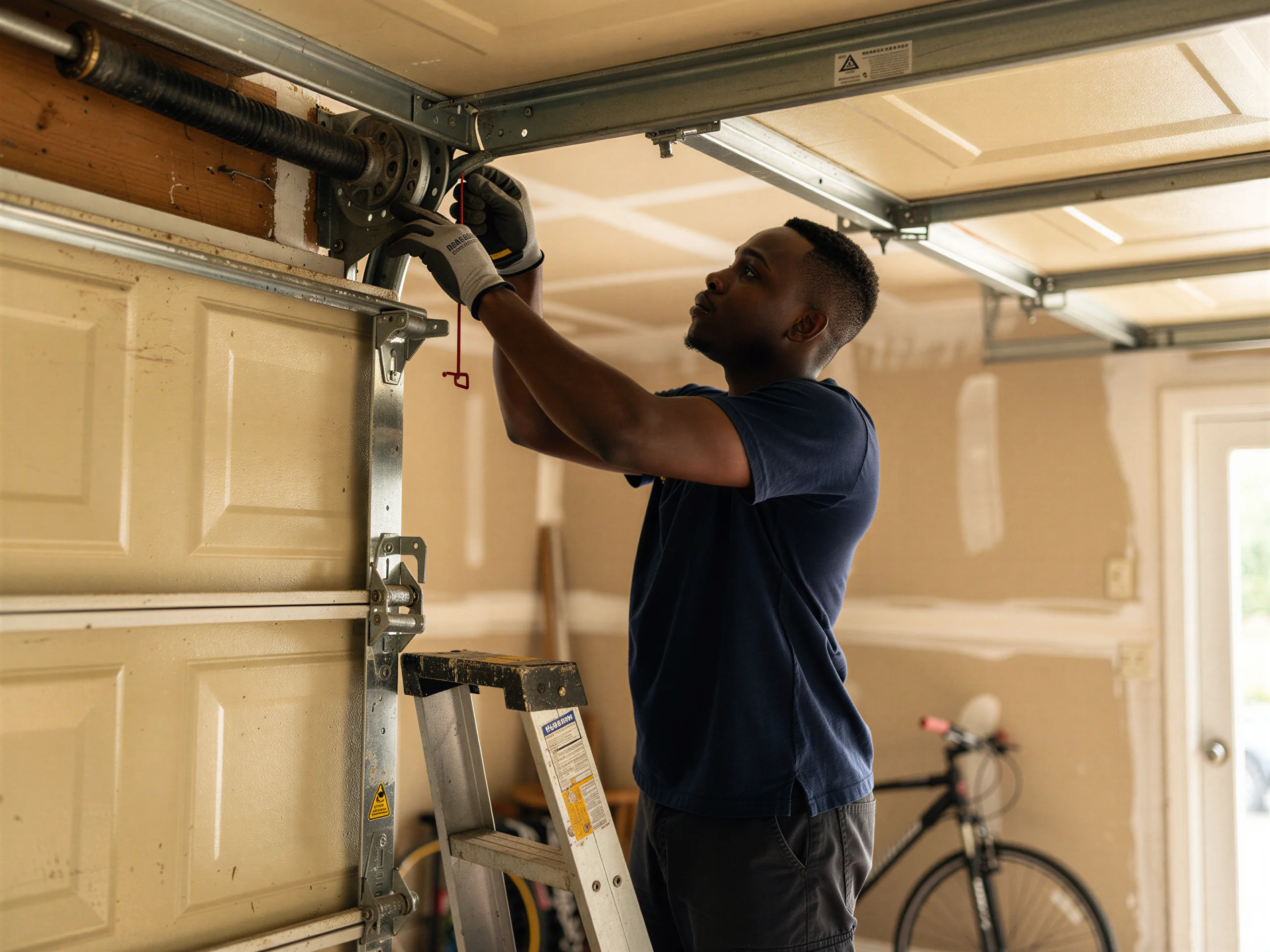
A bottom roller on a door with no extension spring brackets in the way is a reasonable DIY swap for someone comfortable with a socket wrench and patient about working one hinge at a time.
Top roller near spring
The rollers higher up the track, especially the top roller near the torsion spring assembly, are a different matter - that's close to spring tension, and a torsion spring under load is not something to learn on.
Limited roller swaps
If you're only replacing one or two rollers on a single door with no track damage, parts are inexpensive and the job is mostly patience. Where it stops being a weekend job: any sign the track itself is bent, any roller near the top bracket on a door with a torsion spring, or a door that's already sagging on one side.
Track spacing and realignment
At that point you're not swapping a part, you're realigning a system, and getting the track spacing wrong can put the door back off its rail within days. We'd rather tell you to try the bottom roller yourself and call if it's not that than have you pay us for a ten-minute job.
Questions
Common questions
How often do garage door rollers need replacing in Auburn?
There's no fixed interval we can give you without seeing the door, but steel rollers on original hardware from the 1960s-90s housing stock in this area commonly need attention well before the rest of the door does, simply from decades of daily heat-cycling. Nylon rollers installed more recently tend to hold up longer under the same conditions.
Why does my door only make noise at one spot in the track?
That's almost always a single worn or chipped roller passing a specific point, often near a slight bend in the track. The rest of the door sounds fine because the other rollers are still round and riding smooth. Replacing that one roller usually quiets the whole cycle without touching anything else.
Should I replace all the rollers at once or just the bad one?
If the door is older and the rollers are original steel, we usually recommend replacing the full set since they've all seen the same years of wear even if only one is loud right now. On a newer set of nylon rollers with one damaged by debris, swapping just that one is fine.
Will new rollers fix a door that feels heavy to lift?
Sometimes, but not always. Worn rollers do add drag, so replacing them can make a heavy door noticeably easier. But if the door is still hard to lift after that, the springs are likely undersized or worn and that's a separate repair, not a roller problem.
Explore more
Explore More Services In Auburn, CA
Garage Door Spring Repair for Auburn Homes
Torsion springs on Auburn homes built between 1963 and 1995 wear out on a schedule. Learn more →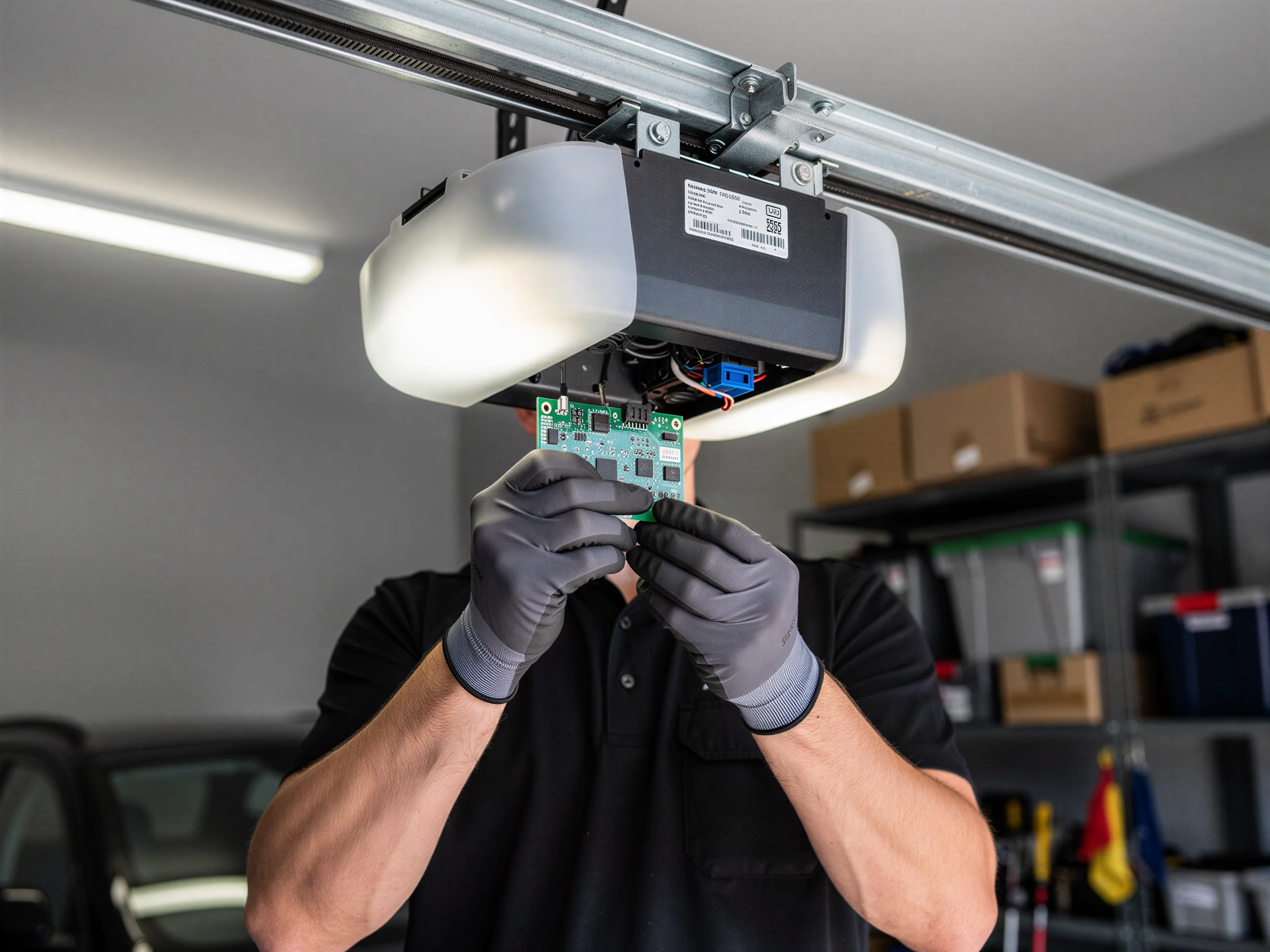
Garage Door Opener Repair Across Auburn
Opener repair for Auburn homes built mostly between 1963 and 1995 - diagnosing worn gears, failing logic boards, and old chain drives across the Auburn service area. Learn more →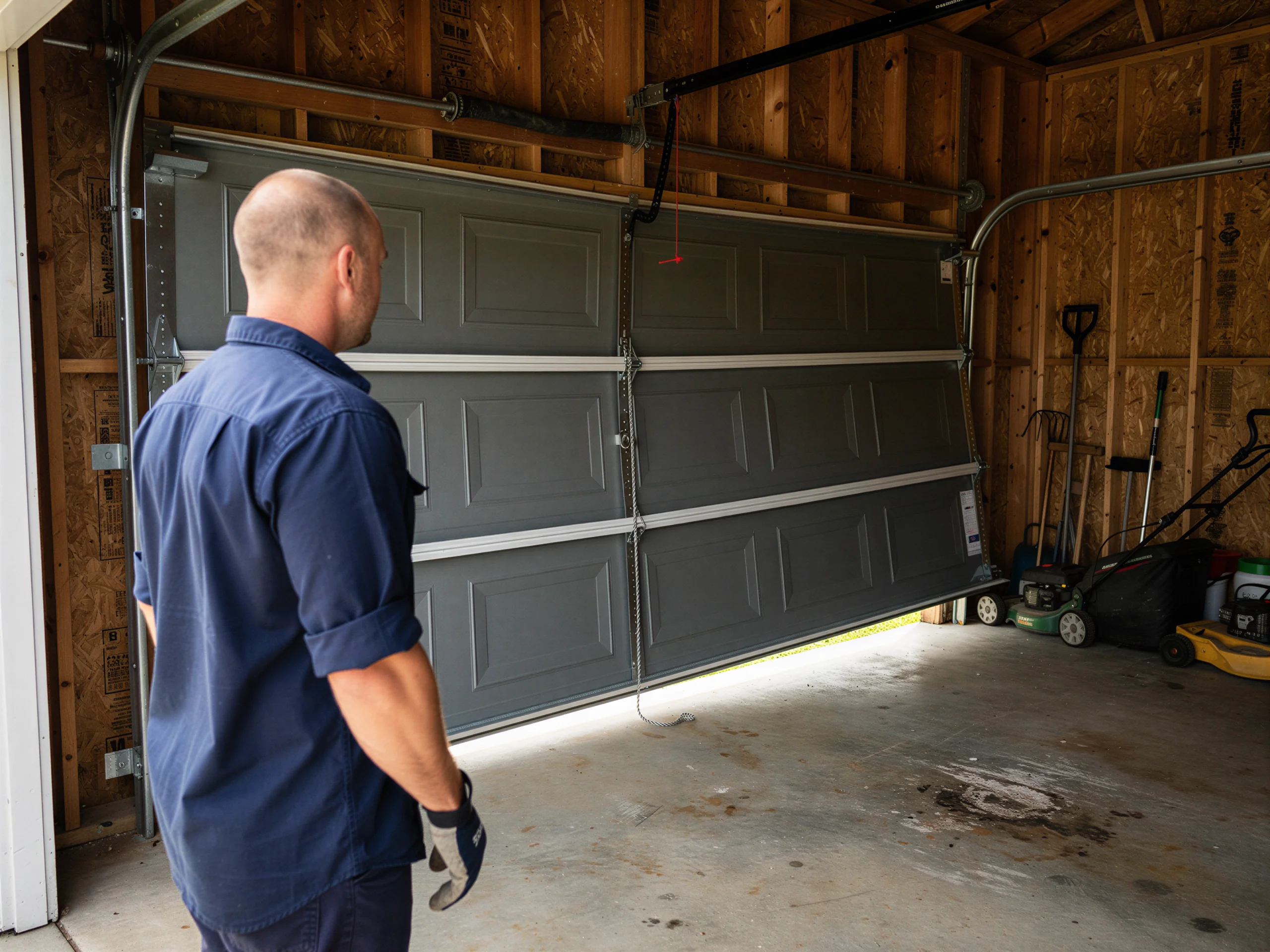
Garage Door Cable Repair for Auburn Homes
Frayed or snapped garage door cables are common in Auburn's 1963-1995 housing stock. Learn more →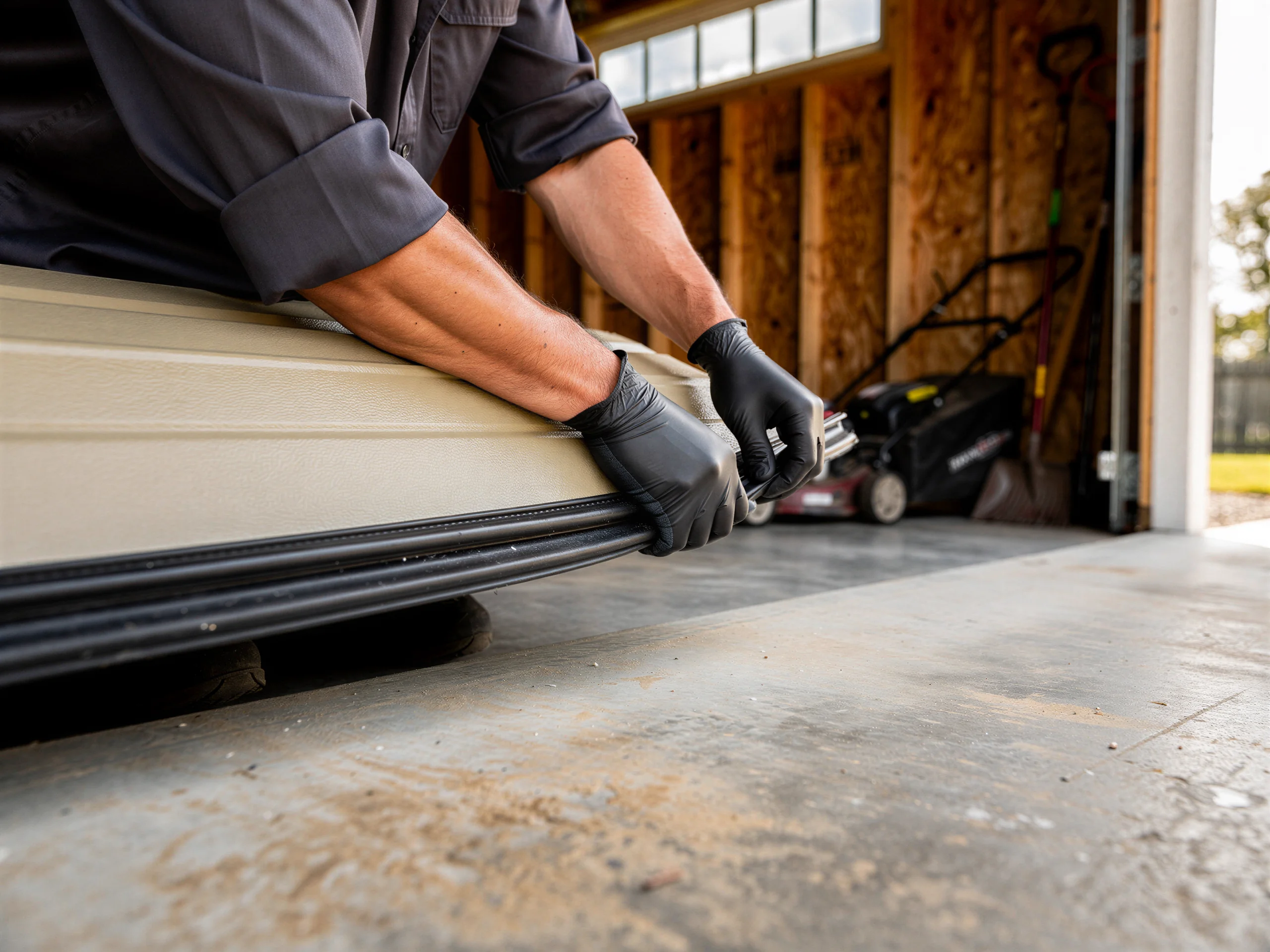
Garage Door Repair and Tune-Up Service for Auburn Homes
Auburn Garage Door Pros repairs springs, openers, and tracks worn out by the 1963-1995 housing stock and seasonal heat swings here near North Auburn, CA. Learn more →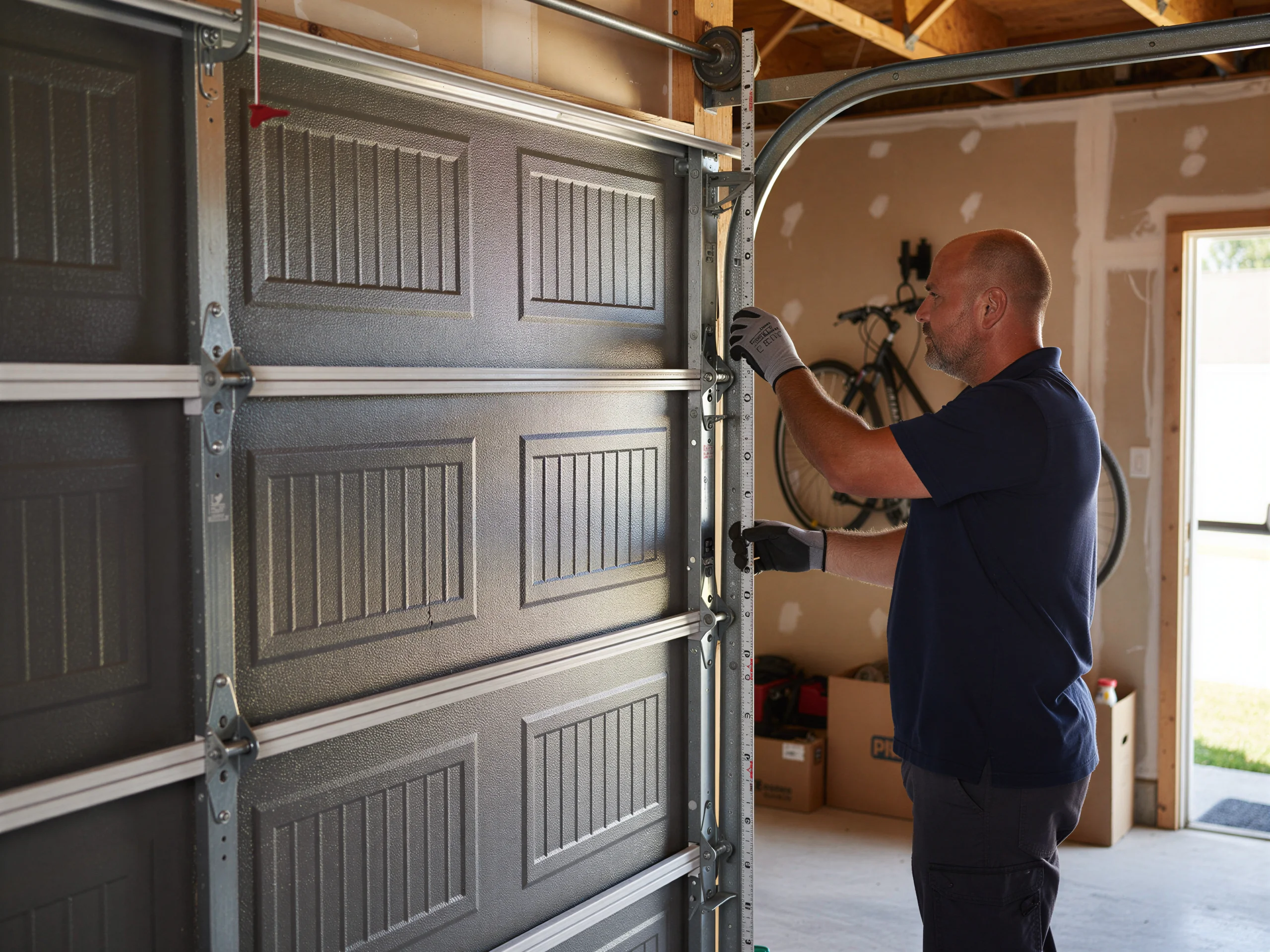
Garage Door Repair Around Auburn, CA
Auburn Garage Door Pros fixes broken springs, off-track doors, and worn openers in homes built between 1963 and 1995 across Auburn and nearby foothill towns. Learn more →Ready when you are
Need a garage door sorted in Auburn?
Auburn Garage Door Pros repairs and installs garage doors, springs and openers in Auburn, CA and the surrounding area.