
Blog
Why Auburn's Older Torsion Springs Fail Without Warning
Most Auburn homes were built 1963-1995, and original torsion springs on that stock are aging out. Here's what to check before a cold-weather snap.
The Problem
Most houses in Auburn and the surrounding areas - North Auburn, Newcastle, Penryn, Meadow Vista, Loomis - went up between 1963 and 1995, with the median landing around 1981. That means a lot of garages out here still have torsion springs that are original or close to it, sized for doors that have since been reskinned, insulated, or swapped for a heavier model. A spring rated for a hollow single-panel door in 1981 is not rated for the double-layer steel or wood-composite door that's hanging on it now. When that spring finally lets go, it's usually sudden - a loud bang, the door stuck halfway, or a cable that's jumped the drum. There's no slow leak with a torsion spring. It winds tighter every open-close cycle for decades, and then one cold morning it's just done. Homeowners on this older stock are the ones who call us saying the door felt fine yesterday. It rarely did - it just hadn't finished failing yet.
What to Check
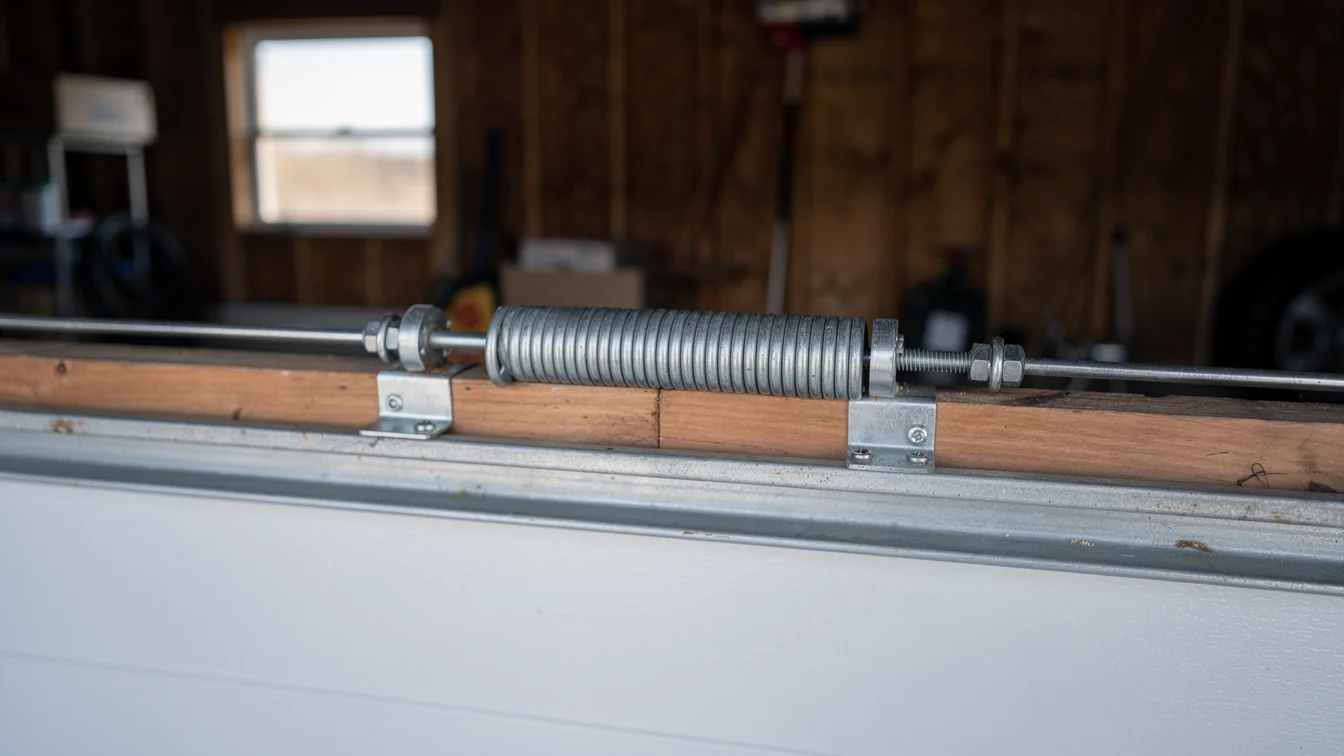
Start with the paint on the coils. A spring with visible rust pitting or flaking paint has been losing tensile strength for years, and that's common on houses from the 1960s-90s build era that never had the spring swapped. Next, look at the end cones - the stamped metal caps crimped onto each end of the coil. On original hardware from that period they're often a thinner gauge than what's sold today, and they're a common failure point before the coil itself goes. Check whether the door has a single spring or two; many 1980s builds in this area were set up for single-door torsion bars that are now undersized for a two-car opener retrofit. Finally, watch the gap between coils when the door is down - even spacing means even tension, bunched coils on one side mean it's already winding unevenly. None of this is a DIY fix once you spot it; it's a reason to get eyes on the bar before it goes.
What Local Conditions Do
Auburn's climate band runs moderate on heat, which sounds easy on hardware, but moderate heat summers followed by cold nights in the foothills still put steel through a temperature swing every single day. Metal contracts in the cold, and a torsion spring that's already near the end of its life cycle has less margin to absorb that contraction before a coil cracks. This is physics, not weather drama - a spring under full wind tension is stiffer and more brittle when it's cold, so the same stress that it shrugged off in July can be the one that snaps it in January. Combine that daily swing with 1980s-era coil metallurgy and thinner factory lubrication, and you get a failure pattern that shows up more in the cold months on older doors, even without any extreme weather event behind it. It's one more reason the age of the hardware matters more here than the brand name on the opener.
The Common Mistake
With median household income in the service area at $99,576, a lot of owners decide a spring replacement is worth doing right rather than patching it twice. The mistake we see most is someone replacing just the spring that broke and leaving its twin - the one that's the same age, same wear, same odds of failing - right where it is. On a two-spring door that's original to a house built in that 1963-1995 window, both coils have logged the identical number of cycles. If one's done, the other is close behind it. We also see people reach for a universal hardware-store spring sized by guesswork instead of door weight and drum size; on the mixed housing stock across these 17 areas, door weight varies enough that a wrong-rate spring either won't lift the door fully or will overtighten the opener gears. We don't always recommend full replacement - sometimes a single spring swap on a door that's otherwise sound is the right call - but matching age and tension on both sides is not optional.
Questions
Common questions
How old does a torsion spring have to be before it's a risk?
There's no fixed number of years - it's cycles, not calendar age. But on a house built in the 1963-1995 range common around Auburn, if the spring has never been replaced, it's worth having checked. Original hardware on a 40-plus-year-old door has usually logged tens of thousands of open-close cycles.
Why did my spring snap in winter and not summer?
Cold steel is stiffer and more brittle under tension than warm steel. A spring already weakened by age and cycle count has less give when temperatures drop at night, so failures cluster in the colder months even without any severe weather involved.
Should I replace one spring or both?
If the door has two springs and they're the same age, replace both. They've carried identical load for the same number of years, so the surviving one is usually close behind the one that just broke.
Can I just buy a spring online and match it myself?
You can, but it has to match door weight and drum size, not just coil length. A lot of the mixed housing stock in this area has doors that were upgraded or reskinned since the house was built, so the original spring spec on record may not match what's actually hanging there now.
Recommendation
You Might Also Like
More garage door guides for Auburn homeowners.
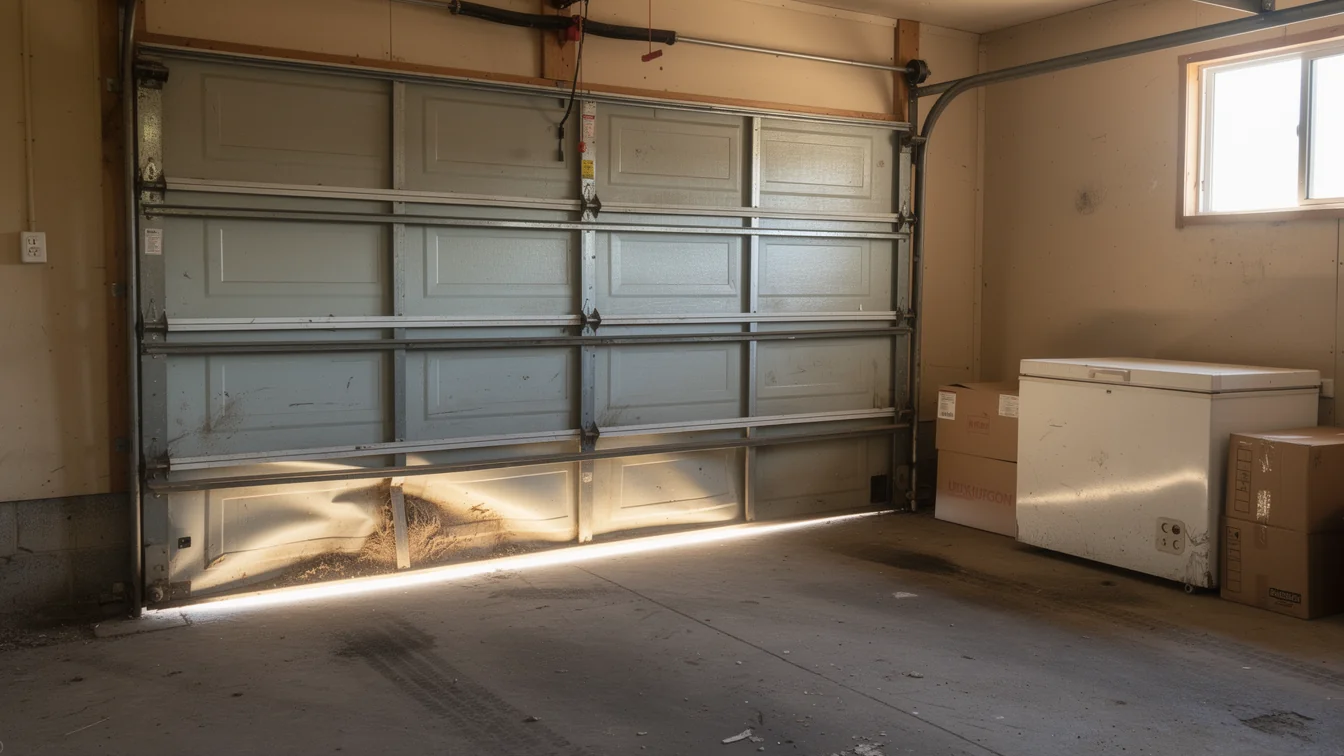
What Auburn's 1963-1995 Housing Stock Means for Your Garage Door
Auburn homes built 1963-1995 carry original hardware and springs rated for a different era.
Read guide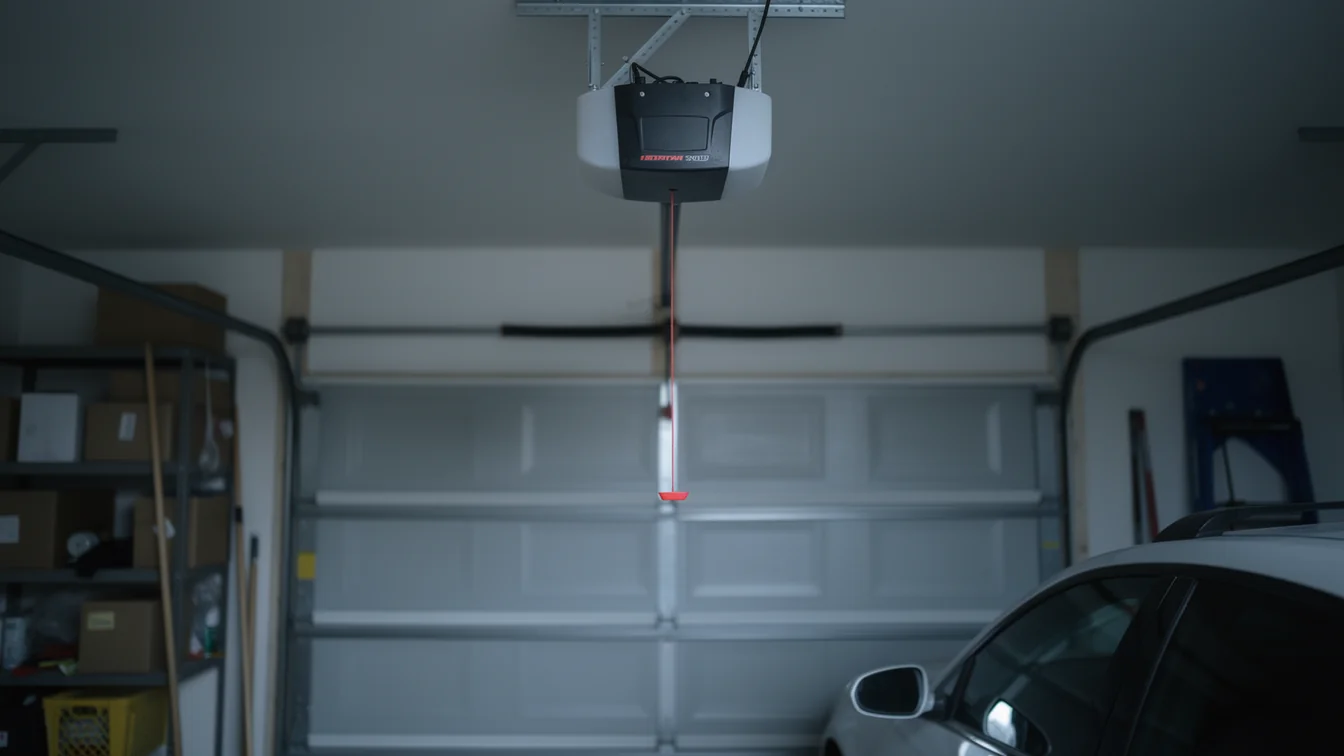
When the Power Cuts, Your Opener in Auburn Is On Its Own
Auburn's 1963-1995 housing stock runs older openers without battery backup.
Read guide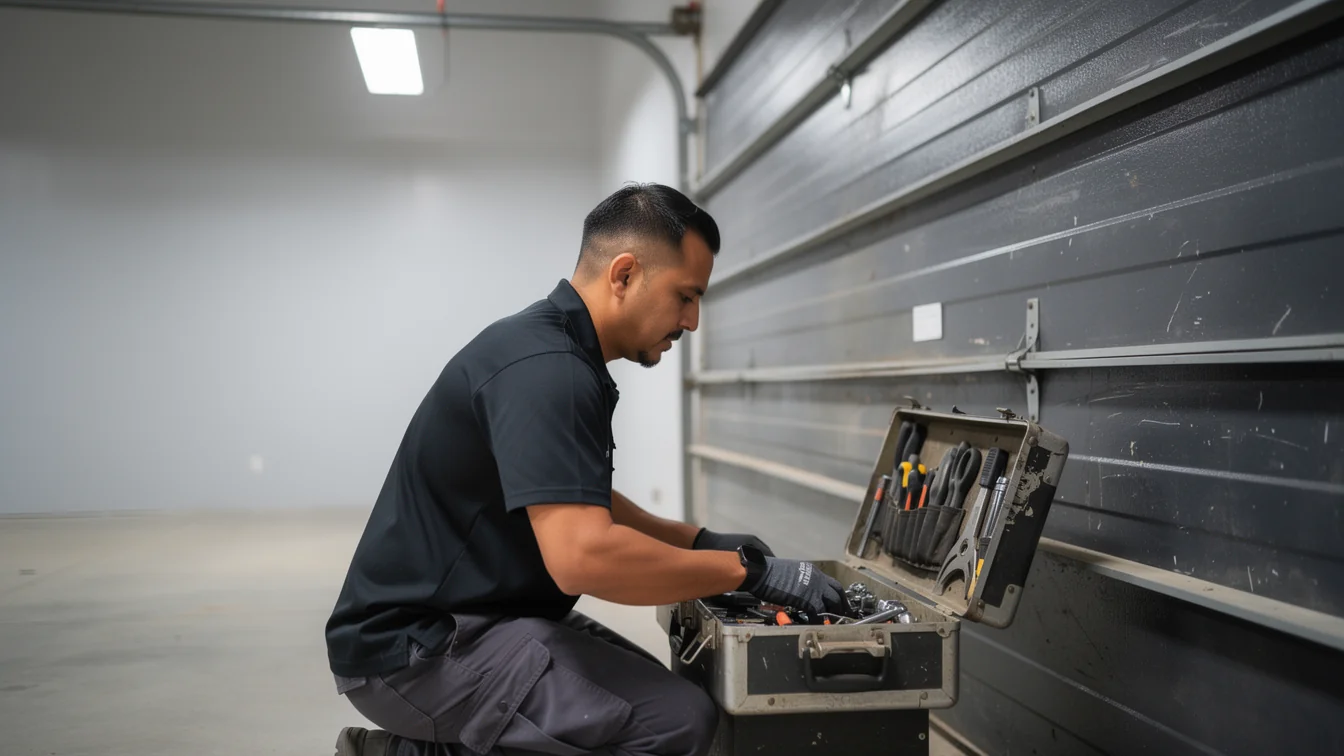
What Actually Happens When We Show Up for a Service Call
A straight look at what our techs check on a garage door service call in Auburn, CA, and why houses built here between 1963 and 1995 need specific attention.
Read guideReady when you are
Need a garage door sorted in Auburn?
Auburn Garage Door Pros repairs and installs garage doors, springs and openers in Auburn, CA and the surrounding area.