
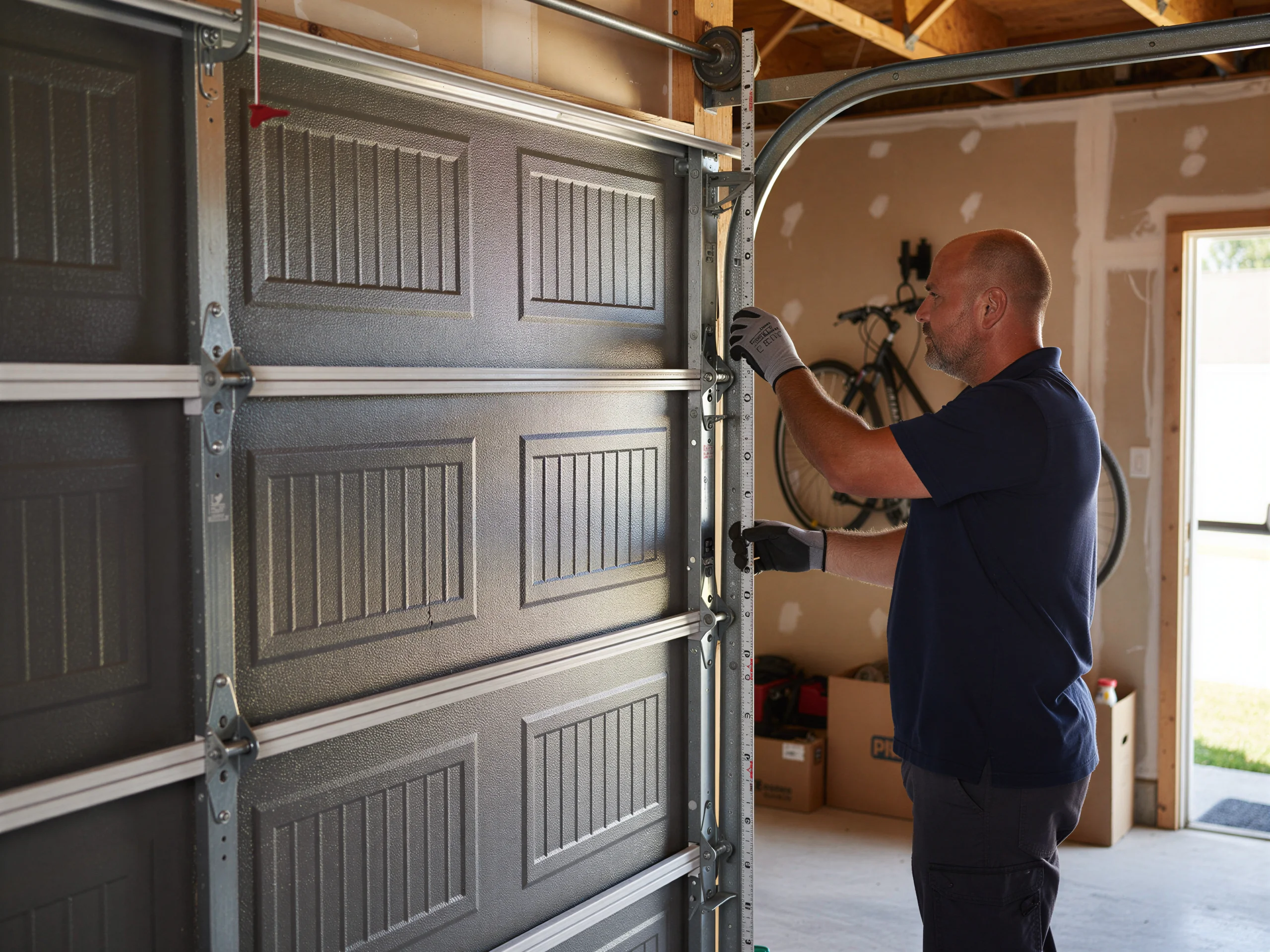
North Auburn, Auburn
Garage Door Repair for North Auburn Homes
North Auburn homes mostly date to 1978, a few years ahead of Auburn's citywide median. That gap changes which springs, tracks, and openers fail first here.
Can You Do This Yourself
North Auburn's typical house went up around 1978, a bit earlier than the 1981 median across Auburn's broader service area. That handful of years matters more than it sounds.
Late-1970s chain-drive setups
A door and opener from the late 1970s is more likely to still be running its original torsion spring and a chain-drive opener with no battery backup, which is a different animal from the belt-drive units common in houses built after 1990.
Basic opener troubleshooting
If your opener hums but the door doesn't move, check the obvious first: is the wall switch getting power, is the safety sensor eye blocked or knocked out of alignment, and is the manual release handle pulled (it disconnects the opener from the door on purpose). Those three things account for a lot of "broken" calls that aren't.
Spring stays untouched
What you shouldn't touch: the torsion spring itself. On a door this age the spring is under a lot of stored tension, and a cone that lets go while you're near it can break bones. If the spring is broken, cracked, or you see a gap in the coil, that's a call, not a weekend project. Cables under tension are the same story - leave them.
How We Fix It
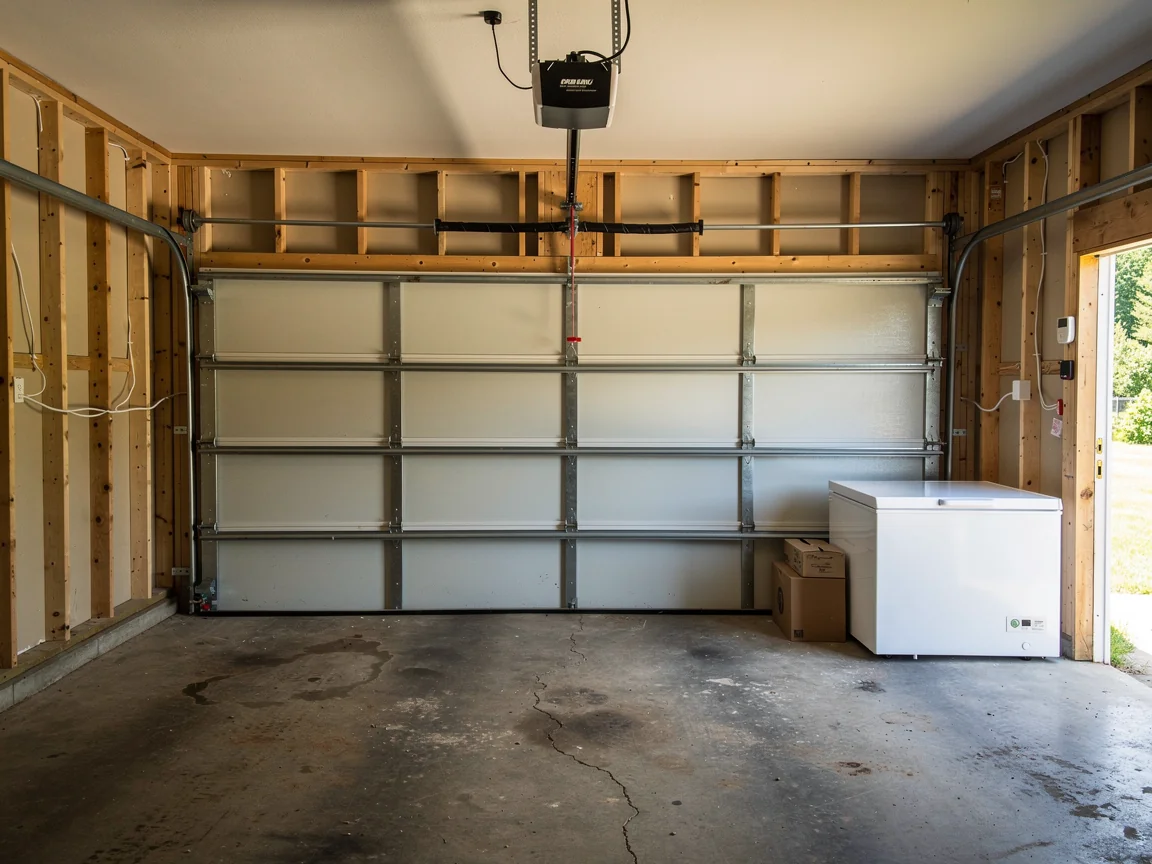
We come out from Auburn, about 2 miles, so there's no separate dispatch or local branch to wait on - it's the same truck and the same stock that covers the rest of the service area.
Checking hardware dates
On arrival the first thing we check on a North Auburn job is the spring and hardware date, because houses built around 1978 commonly still have their first or second spring set and original track brackets, not the galvanized, longer-life parts that came standard later.
Force settings drift
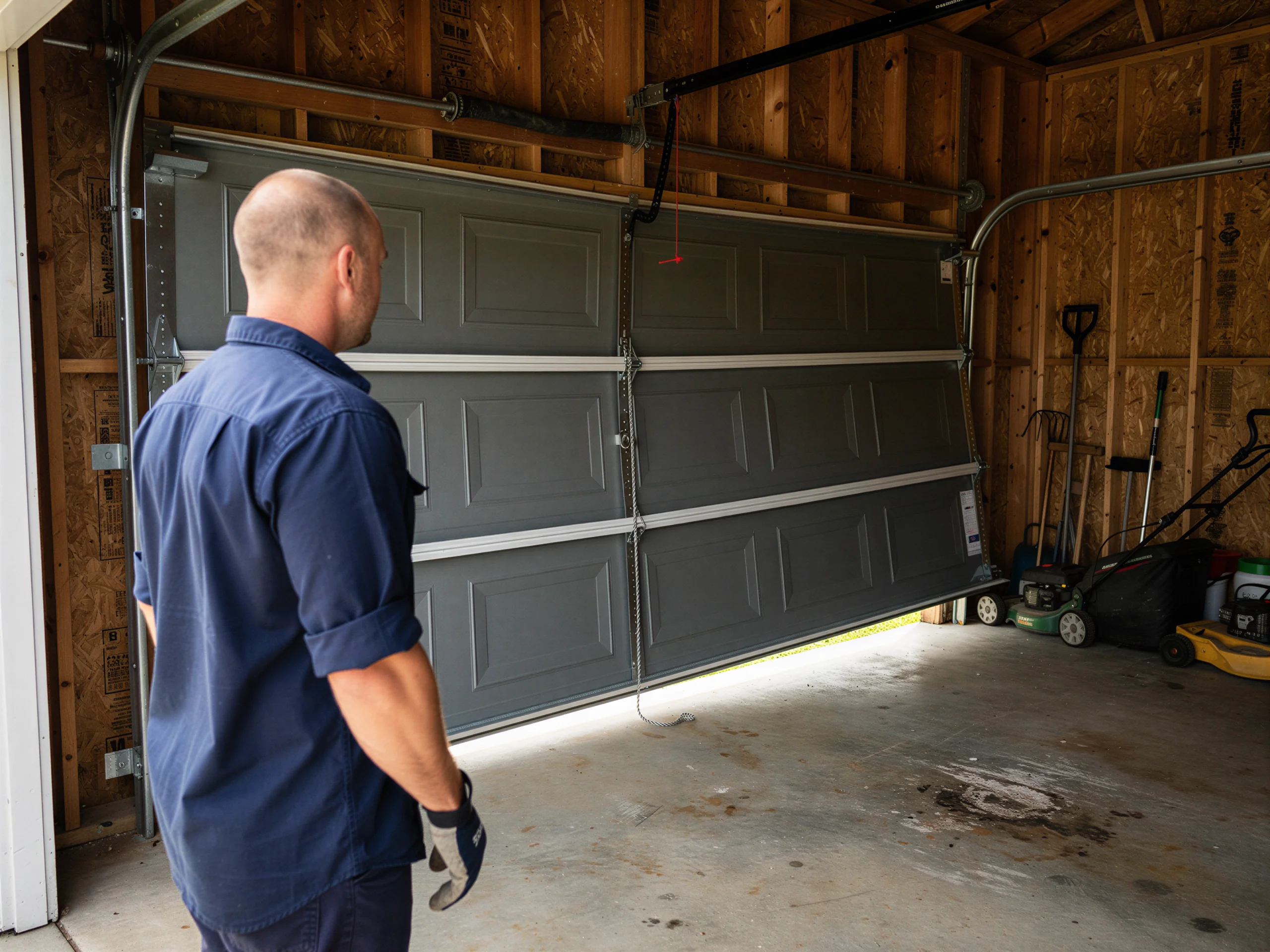
For a stuck or off-track door, we check the tracks for bends or separation from the wall, check roller wear, and check whether the opener's force and limit settings have drifted - which happens naturally as springs age and lose a bit of lift over years of cycles.
Board, capacitor, sensor tests
For a dead opener, we test the circuit board, the capacitor on units that use one, and the sensors before we assume the whole unit needs replacing. A full opener swap is sometimes the right call, but we don't start there.
Parts We Carry
We carry common torsion spring sizes, cables, rollers, and hinges on the truck, plus standard opener parts like sensors, drive gears, and logic boards for the major opener brands used in this area's housing stock. For a door this age, the springs and cable gauges are usually standard sizes we stock - not a special order.
Where things slow down is less common wind-load hardware or a specific opener model that's been discontinued. If your house still has its original hardware from 1978, most of it matches sizes we carry; it's the occasional oddball bracket or an obsolete opener logic board that can mean a short wait while we source a part. We'll tell you on the spot if that's the case rather than guess.
How Long You Are Without the Door
Most spring, cable, roller, and sensor repairs finish in one visit - the door goes up and down the same day we're there.
Obsolete opener boards
What stretches that out is a part that isn't standard: an obsolete opener board, for instance, or hardware sized for a door that isn't common in a neighborhood built mostly in the late 1970s to early 1980s.
Replacement timeline quotes
If the fix is a full door or opener replacement rather than a repair, that's a different timeline than a spring swap, and we'll give you a straight answer on that before we start rather than after.
What You Are Seeing
The door won't fully close and reverses partway - often a sensor alignment issue, sometimes a limit setting that's drifted with age. The door is heavy to lift by hand and the opener strains - that's usually a spring that's lost tension, common once a spring set has been cycling for several decades on a house from this era. A loud bang followed by a door that won't open at all is almost always a broken spring; don't try to force it.
Grinding or popping from one side of the door usually means a roller or a bent track. A door that opens but drifts sideways as it goes up points to uneven cable tension or a track that's come loose from its wall bracket - more likely on original hardware than on anything replaced in the last decade.
The Complications
North Auburn's housing sits at roughly 1978 median build year, a few years earlier than the wider Auburn service area's 1981 median, and household income here runs lower too - $72,125 against the area's broader $99,576. That combination matters for one practical reason: original hardware tends to stay in service longer here rather than get replaced proactively, so by the time it fails it's often failing all at once - spring, cable, and roller wear showing up together instead of one at a time.
The climate here runs a moderate heat band, which is easier on garage door hardware than a harsher climate would be, but it doesn't stop springs from fatiguing over 40-plus years of cycling. Multi-car households and double doors see more cycles per week, which shortens spring life regardless of the weather.
Questions
Common questions
Why does the age of my North Auburn house matter for a garage door repair?
Houses here are typically from around 1978, a bit earlier than the 1981 median across the wider Auburn area. That means more original torsion springs and track hardware still in service, which tend to fail together rather than one part at a time. Knowing the build era helps us guess what's likely worn before we even open the door.
Do you have a branch in North Auburn?
No. We run out of Auburn, about 2 miles away, and cover North Auburn as part of that service area. There's no separate local office or truck stationed here - it's the same crew and stock that services the rest of the area.
My door bangs loudly and won't open - what happened?
That's almost always a broken torsion spring letting go. Don't try to lift the door manually or force the opener - the spring is under heavy tension even when broken. Leave it alone and call for a repair.
Can I replace a torsion spring myself?
We don't recommend it. A torsion spring under tension can cause serious injury if the cone slips while you're adjusting it. Rollers, hinges, and sensor alignment are reasonable DIY jobs; springs and cables under tension are not.
Explore more
More Services in North Auburn
Garage Door Service
Garage door repair for North Auburn's 1970s-80s tract homes, two miles from our Auburn shop. Learn more →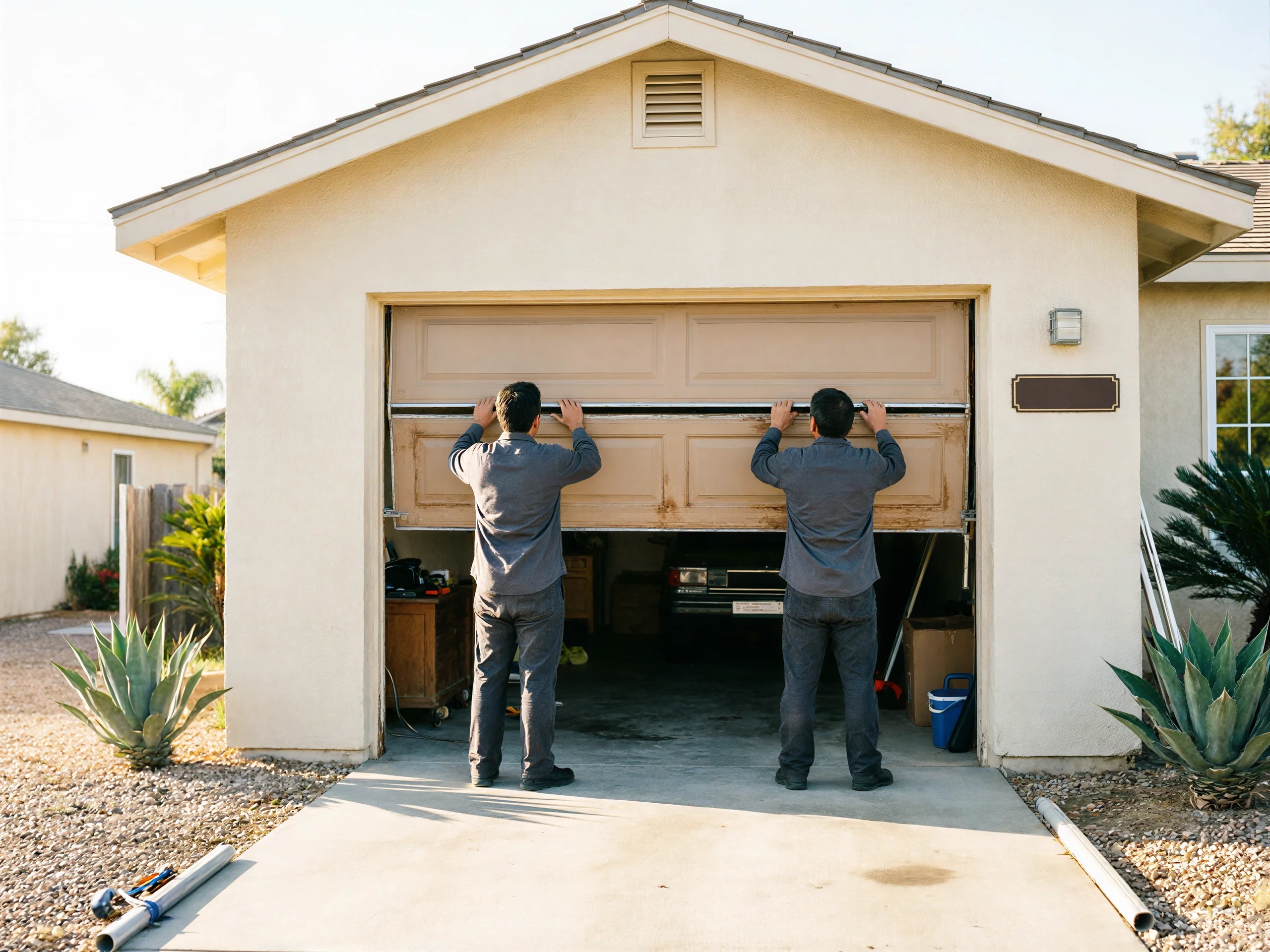
New Door Installation
Most North Auburn homes went up around 1978, two years before the service area's own 1963-1995 build run even started. Learn more →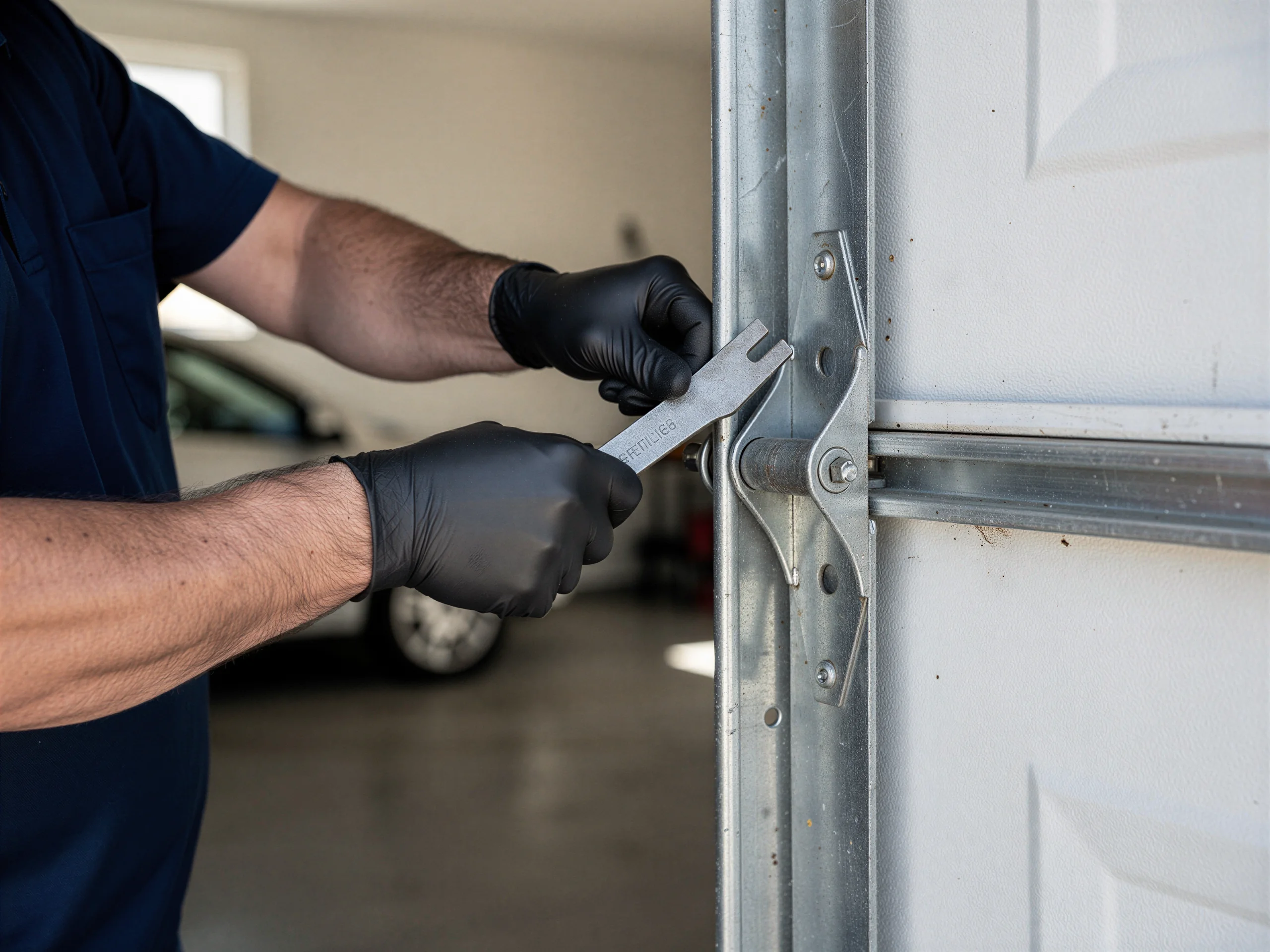
Off Track Repair
North Auburn homes mostly date to 1978, a few years ahead of Auburn's own median. Learn more →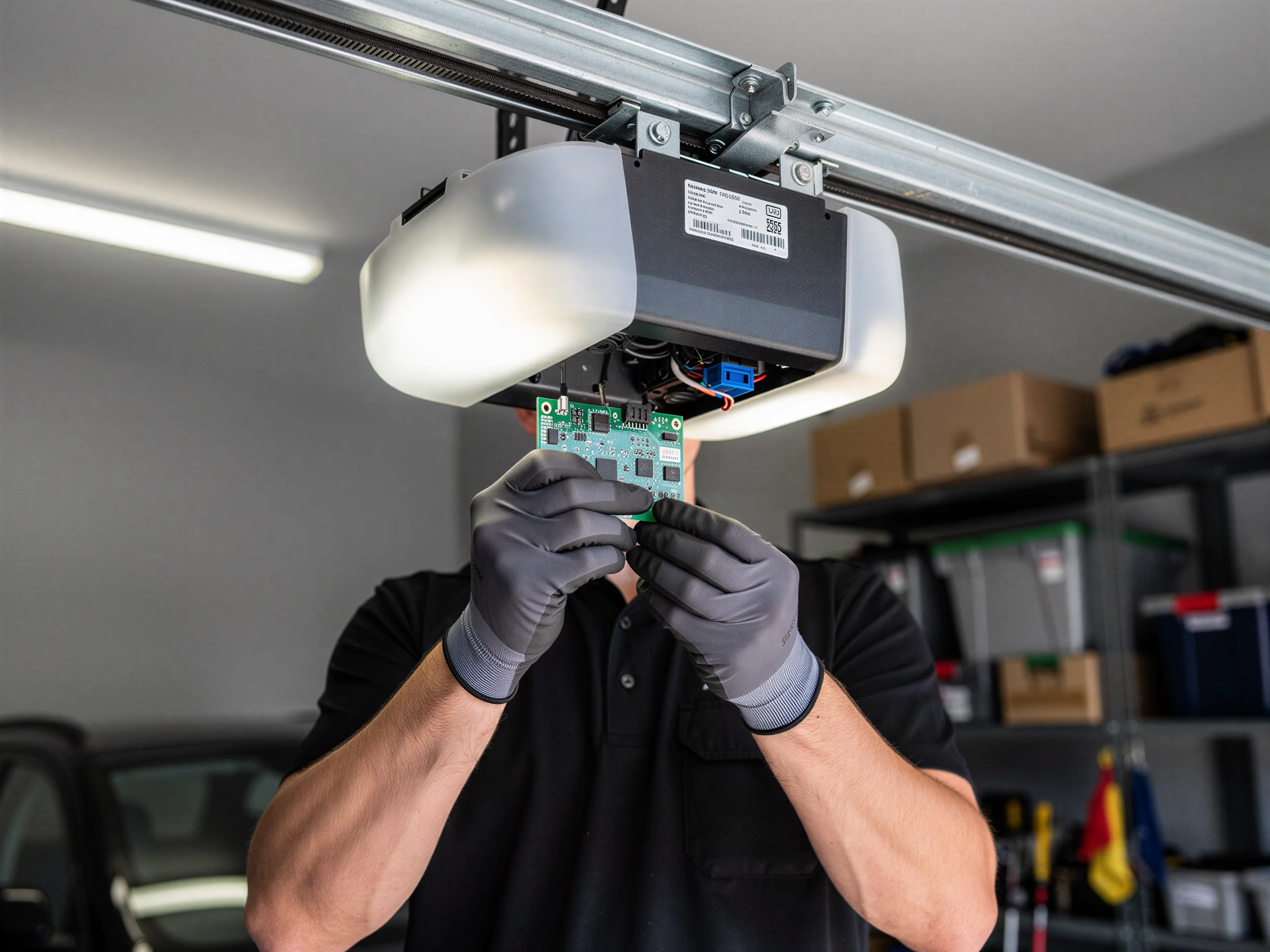
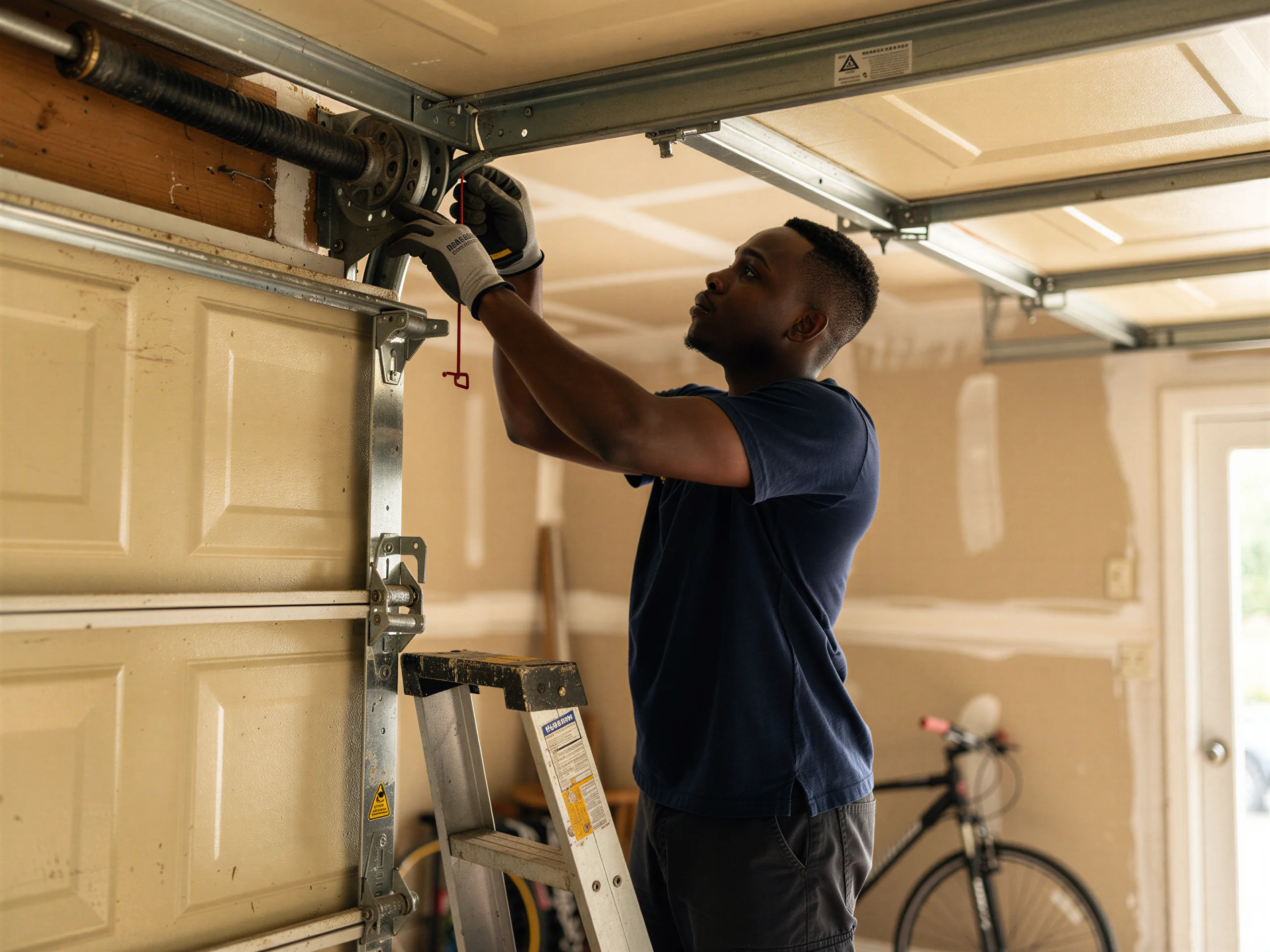
Roller Replacement
North Auburn's 5,420 households sit mostly in houses built around 1978 - old enough that steel rollers have worn oval and nylon ones have cracked. Learn more →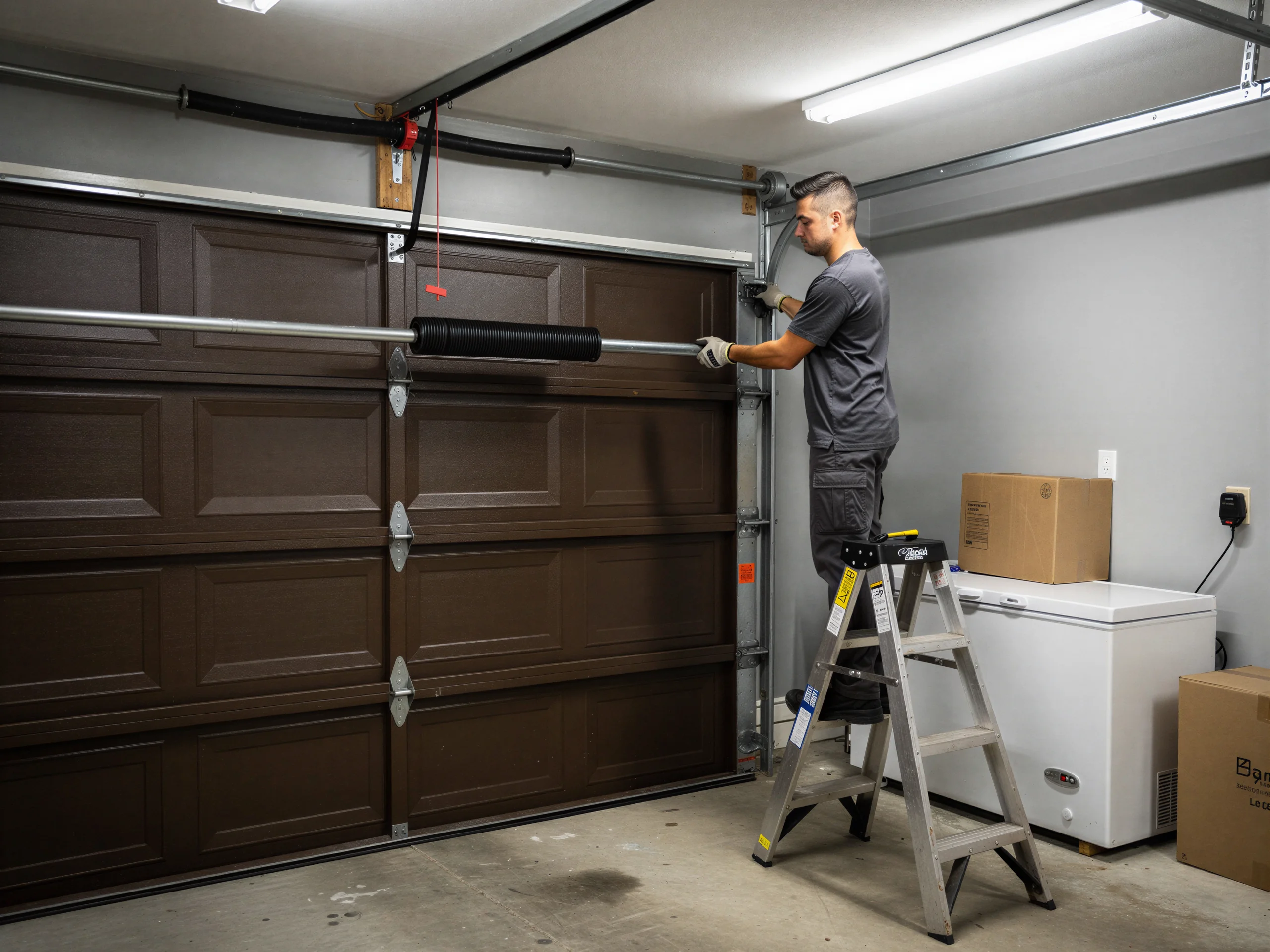
Spring Repair
Median income here is $72,125 and most houses date to 1978 - that combination changes the repair-or-replace math. Learn more →Ready when you are
Need a garage door sorted in Auburn?
Auburn Garage Door Pros repairs and installs garage doors, springs and openers in Auburn, CA and the surrounding area.